Agent Ticketing Platform
Tickets in, tested code out, with humans at the gates
A ticketing system where tickets are worked by AI coding agents through a fixed pipeline: completeness, context, decomposition, implementation and QA in parallel, review and integration. People answer questions and approve merges; the pipeline does the rest and records what each step cost.
What It Is
Agent Ticketing Platform is one store and one implementation pipeline for every project. A ticket filed through the command line, the API, an AI session or the board goes through a flow that is pinned when the ticket is submitted. An analyst agent first checks the ticket is complete and stops with specific questions if it is not. A scout gathers context, a planner splits the work into chunks, and each chunk is implemented and then tested by a separate QA agent, which sends it back with a concrete finding when it fails. The chunks are assembled, reviewed and finally integrated, which waits for a person's approval.
Every stage records its time, attempts and cost, with budgets per stage and per ticket. After each commit the platform runs the project's own test command itself, rather than trusting an agent's report that the tests pass. The board shows every project's tickets by status, and a report per ticket shows the stage timeline, the chunks, any rework and what is waiting on a human.
Inside Agent Ticketing Platform
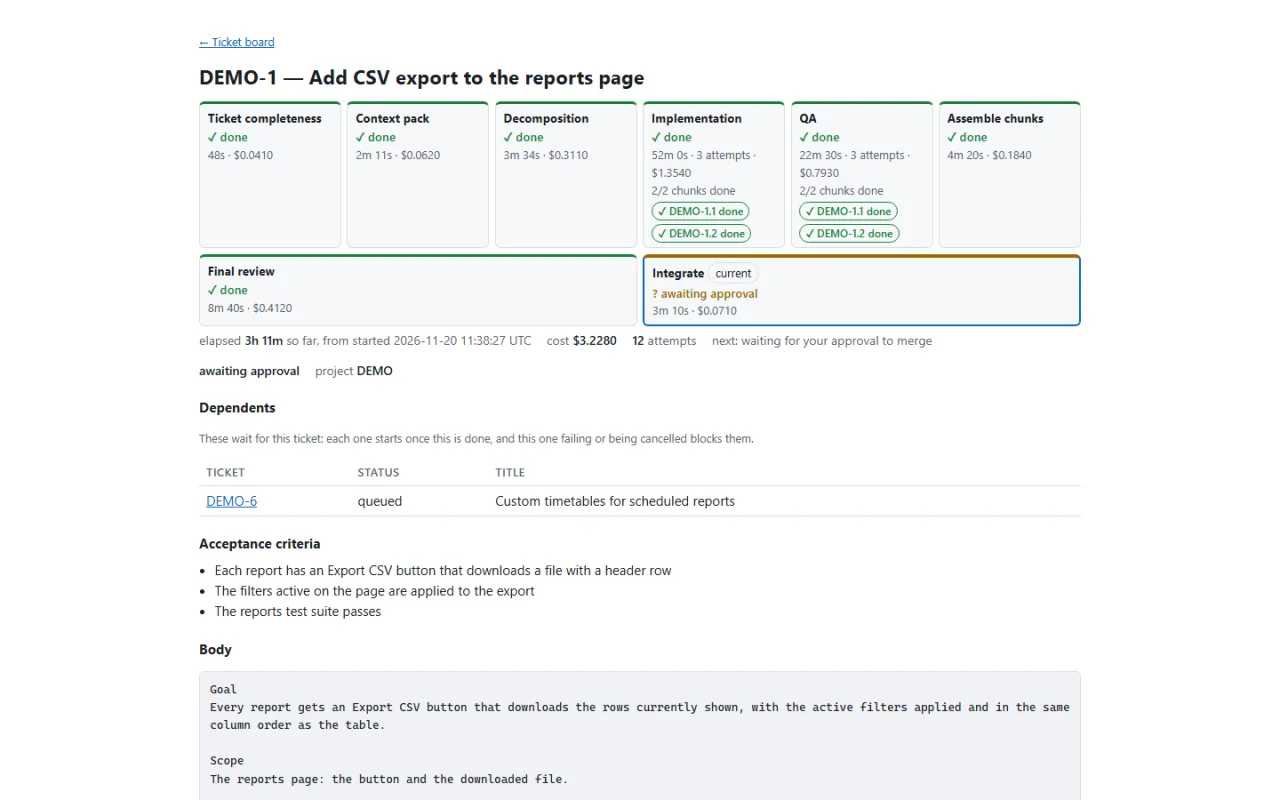
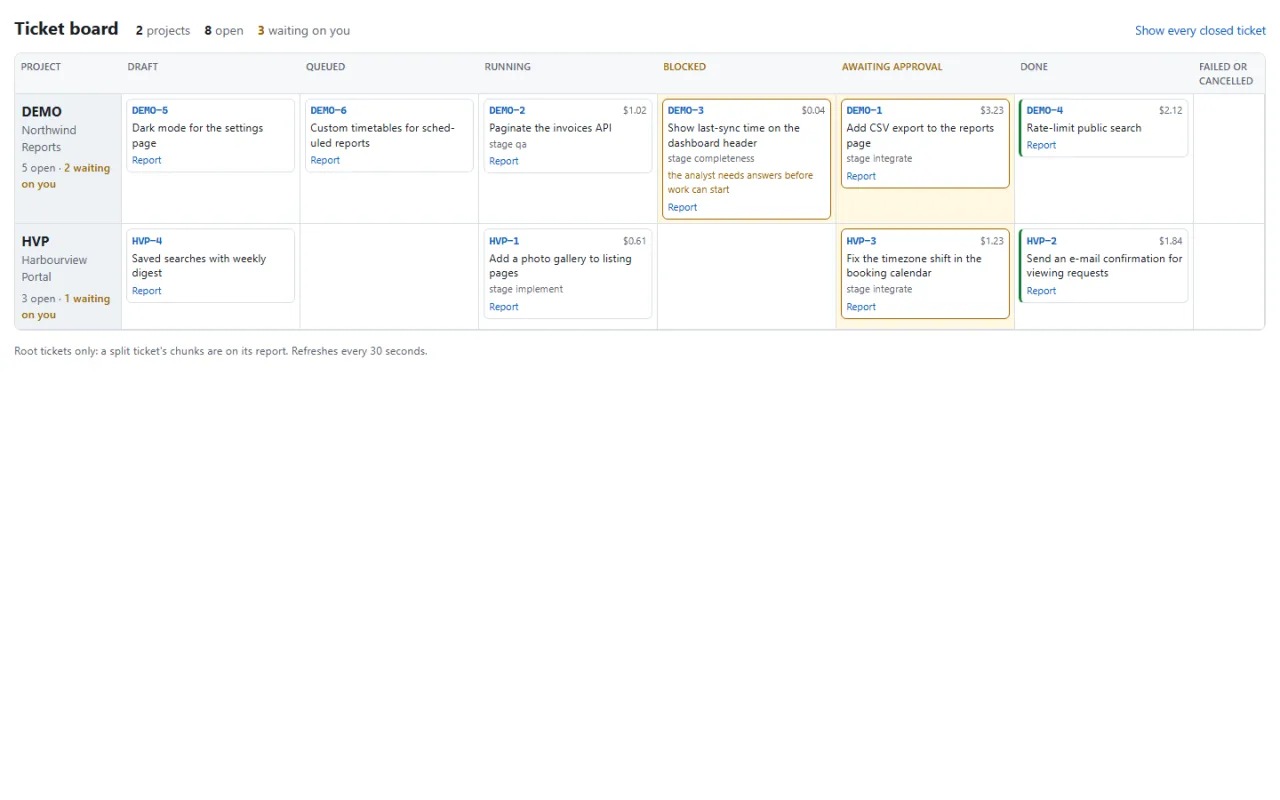

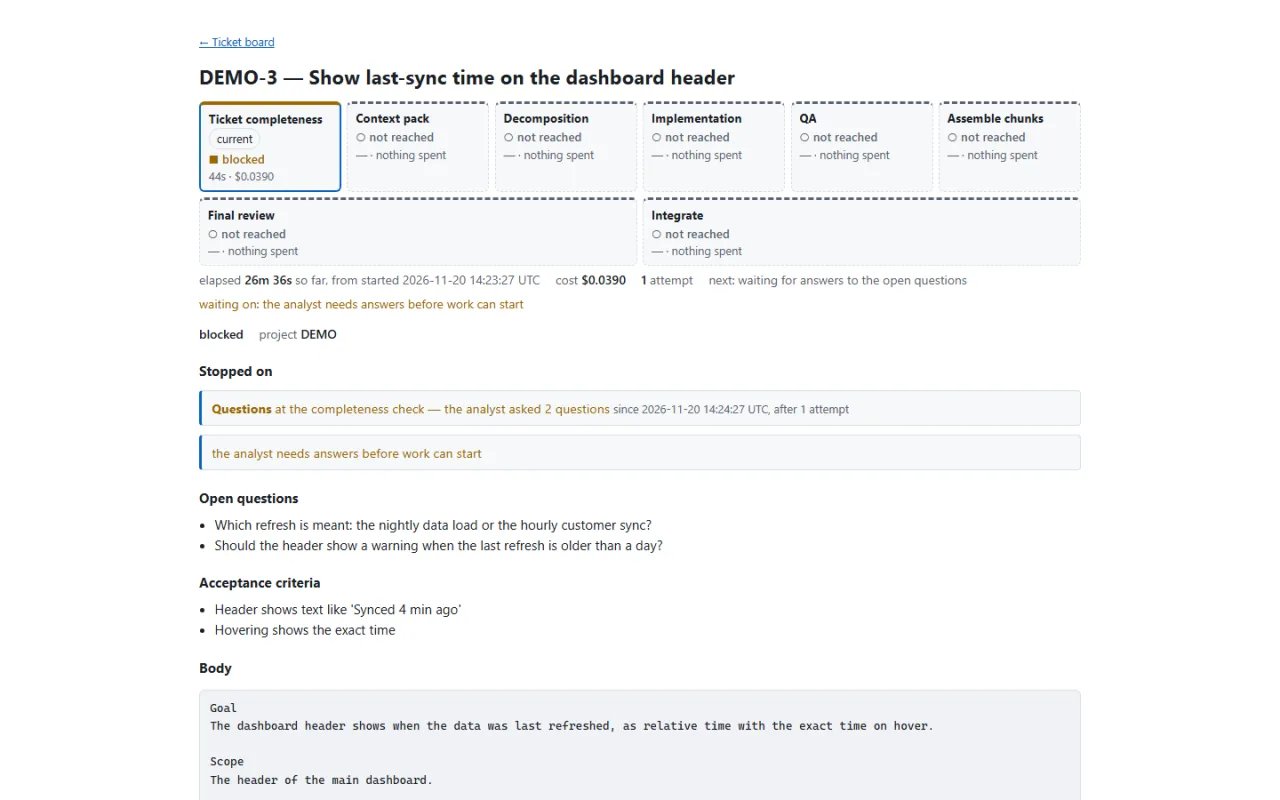
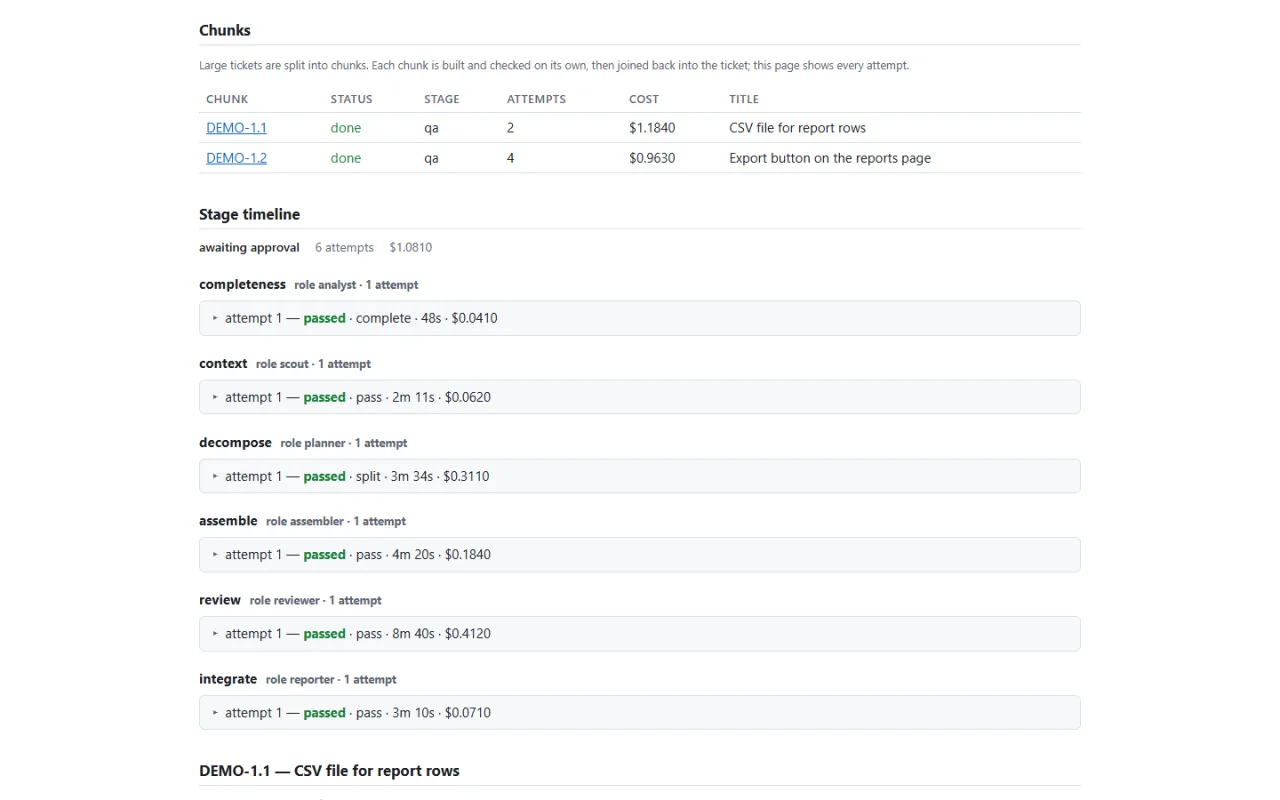
Every screenshot shows demo data: the organisations, people and figures are made up.
Why It Exists
AI coding agents are fast and inconsistent. Left alone they skip unclear requirements, mark their own homework and stop halfway. We wanted the discipline a good engineering team applies, written down as a pipeline: a ticket standard that every ticket must meet, separate roles for writing and checking code, rework on failure, and human gates at the points that carry risk. It is how we run our own engineering, and the same discipline we recommend when bringing AI into a development team.
What It Is Worth
Unclear work stops early
Tickets without acceptance criteria, enough detail or a command that verifies them are refused at filing. A ticket that is still unclear stops at the completeness gate with questions, instead of an agent guessing.
Checking is separate from doing
QA and review are different agents from the implementer, with read-only roles where they should not write, and the platform runs the tests itself after every commit.
Cost is visible and capped
Each stage and ticket carries a budget, and the board shows what every ticket has cost so far.
People decide what merges
Integration waits at an approval gate. Answers, approvals and rejections can be given from the command line or as comments on the board.
Who It Helps
Engineering leads
Delegate well-specified work to agents across several projects and see, on one board, what is running, blocked and waiting for a decision.
Developers
Spend their time on the questions and reviews that need them, with a full timeline of what each agent did when they do step in.
At a Glance
| Status | Internal: runs inside Egon Expert Ltd and is not sold on its own; In internal use |
|---|---|
| Default flow | Completeness, context, decomposition, implementation, QA, assembly, review, integration |
| Interfaces | Command line, HTTP API, MCP for AI sessions, and a board |
| Built by | Egon Expert Ltd |
Related Products
Need Something Like This?
We build platforms like Agent Ticketing Platform for clients, and help in-house teams build their own. Start with a free 30-minute conversation about what you need.
Book a Free Consultation